

Milo Bosh Interview Response
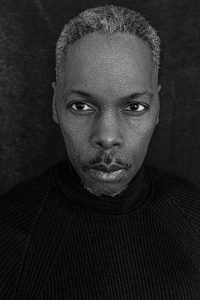
Black-and-white close-up portrait of a person with short textured hair and a mustache, wearing a dark sweater, looking directly at the camera against a dark backdrop.
Receiving this fellowship clarified something I had been circling but hadn’t fully named: that writing has become central to my practice, not secondary to my photography.
I’ve always written in a private register—without assuming an audience—because it gives me the freedom to think through what I’m seeing without needing to make it immediately legible. In that space, I return to images from exhibitions, performances, and everyday encounters and try to put into words what lingers.
Within a week of learning about the fellowship, I found myself writing more consistently—almost daily. Not to build an audience, but to listen more closely to my own thinking. What became visible through that process was the labor I had overlooked: a sustained attention to visual culture, particularly as it relates to Black Americans, and a way of working through images that I hadn’t fully recognized as practice.
The grant didn’t redirect that—it brought it into focus.
It also made me more aware of how support moves through a practice. I traveled to New York for the AIPAD Photography Show 2026—a trip made possible by the fellowship, while access to the fair itself came through my writing on Substack. It was there that I crossed paths with Louis Mendes, who has been making street portraits for decades.
He asked to photograph me, and I agreed. Afterward, I paid him—aware of the materials, the time, and the legacy of his practice. What stayed with me wasn’t just the image, but the exchange itself. Without the grant, I might not have been able to participate in that moment in the same way.
It allowed me to support his practice and, in return, receive something shaped by his. That felt like a small but concrete example of what it means for resources to circulate within a Black art ecosystem—not as an idea, but as a lived gesture of support and respect.
At the same time, the fellowship has shifted how I relate to photography. I still make images, but I don’t feel fully aligned yet with the photographs I imagine. Writing, for now, offers more clarity. It allows me to slow down and think with precision about what I’m seeing and why it matters. Rather than replacing photography, it’s helping me build toward it—toward work that is more intentional, more considered, and grounded in care and research.
My practice is also shaped by the broader conditions around cultural production—where images circulate quickly and meaning is expected to stabilize just as fast, especially in a moment where support for the arts is increasingly uncertain. My response isn’t to match that pace, but to resist it through attention. I return to images, stay with them, and allow them to remain unresolved.
In that sense, the work doesn’t try to define the moment so much as sit inside it.
That exchange clarified something I had been approaching more intuitively: how care operates within a practice.
Collective care, for me, begins there—in attention, in return, in exchange. It takes shape in the writing, in the consistency of showing up to think through what I’m seeing, and in moments like that encounter in New York, where access, support, and practice meet in a tangible way.
What I’m trying to build is something sustained: a space where writing and photography remain in dialogue, and where both are shaped by time, care, and a deeper sense of responsibility to the communities and histories they move through.
milo bosh


Leave A Comment